



Content
Whisky is one of the main reasons guests book a day out with me. My name is Aleman, and I have spent thirty years guiding visitors around the Highlands from my home in Inverness.
Before many whisky tours, guests ask whether they should visit Highland distilleries or travel into Speyside. The answer depends on the type of day you want.
Speyside works well for visitors who want many famous distilleries close together. The Highlands are easier from Inverness and offer more variety in the surrounding scenery.
A full day gives you another option. A carefully planned route from Inverness can include both regions.
Most people have room for one whisky day during their first trip to Scotland. This guide will help you decide where to spend it. I will cover the whisky, travel times, distillery choices and practical details that matter when planning the day.
The Main Differences Between Highland and Speyside Whisky
What You Need to Know First
- Speyside is a protected whisky region within the wider Highland area.
- Around 50 working distilleries are based in Speyside.
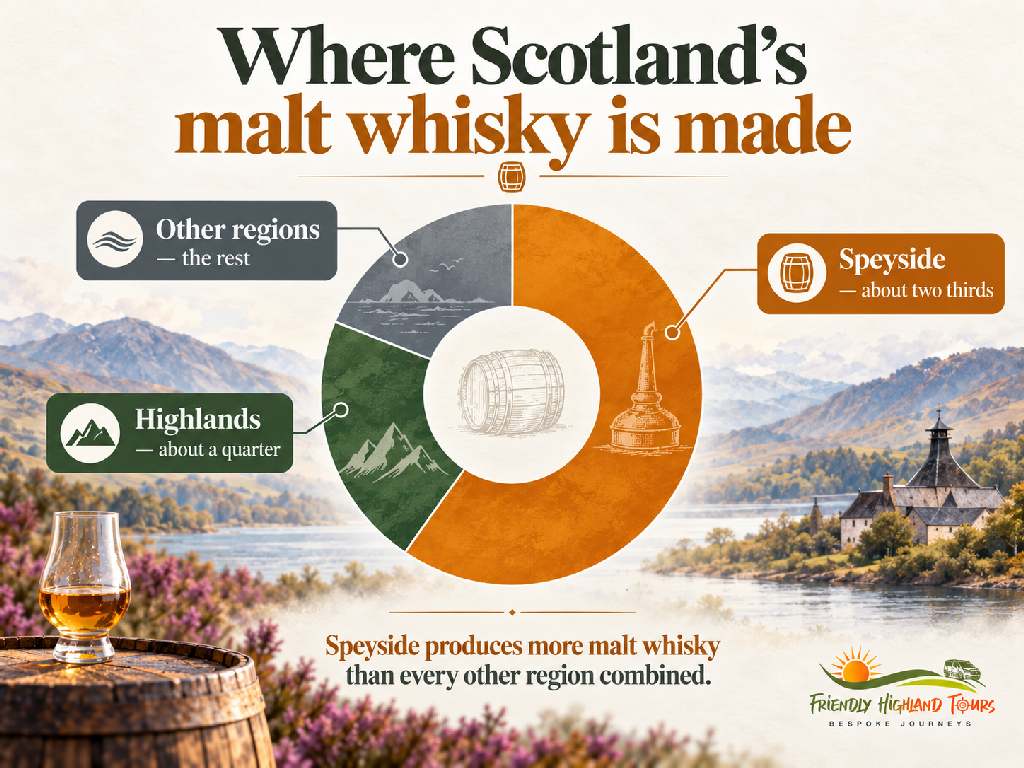
- Speyside produces roughly two thirds of Scotland’s malt whisky. The Highlands produce about a quarter.
- Glen Ord and Tomatin are among the closest Highland distilleries to Inverness. Both are around 25 minutes away by car.
- Central Speyside is around 1 hour 20 minutes from Inverness.
- Two or three distillery visits make a realistic whisky day.
- Scotland’s drink-drive limit is 50 milligrams of alcohol per 100 millilitres of blood. This is lower than the limit in England and Wales.
Is Speyside Part of the Highlands?
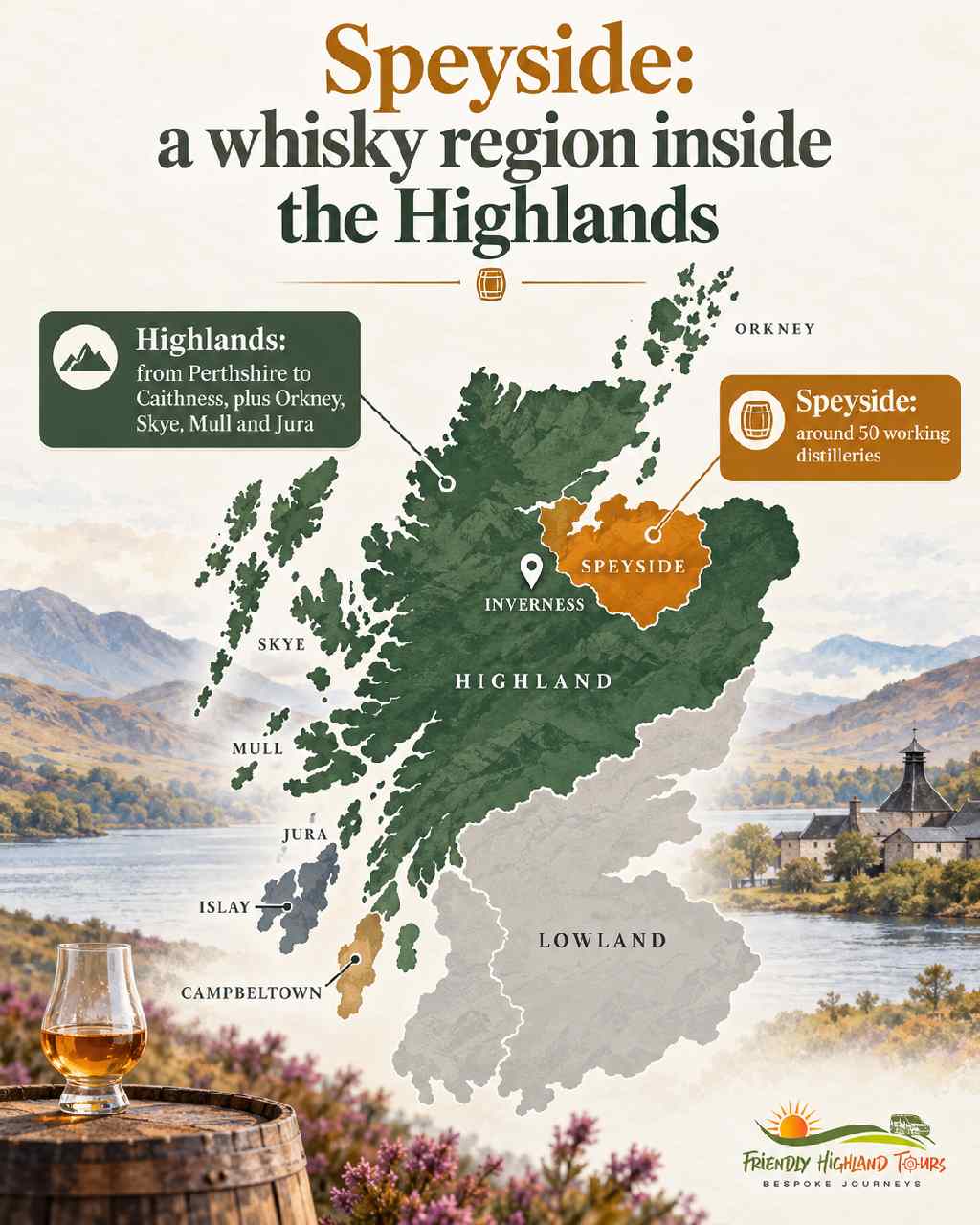
Geographically, Speyside is part of the wider Highland area. Many guests are surprised when I explain this.
Scotch whisky law recognises five whisky regions in Scotland: Highland, Speyside, Lowland, Islay and Campbeltown. Speyside has its own protected name because so many distilleries are concentrated around the River Spey and its tributaries.
This can cause some confusion. A Speyside distillery may legally use either “Speyside” or “Highland” on its label. Glenfarclas is one example. The distillery is in the heart of Speyside but has long described its whisky as a Highland single malt.
For visitors, the practical difference matters more than the legal one. Speyside is compact and many distilleries are only a few miles apart. Highland distilleries cover a much larger area from Perthshire to Caithness. The region also includes distilleries on Orkney, Skye, Mull and Jura.
How Highland and Speyside Whisky Taste
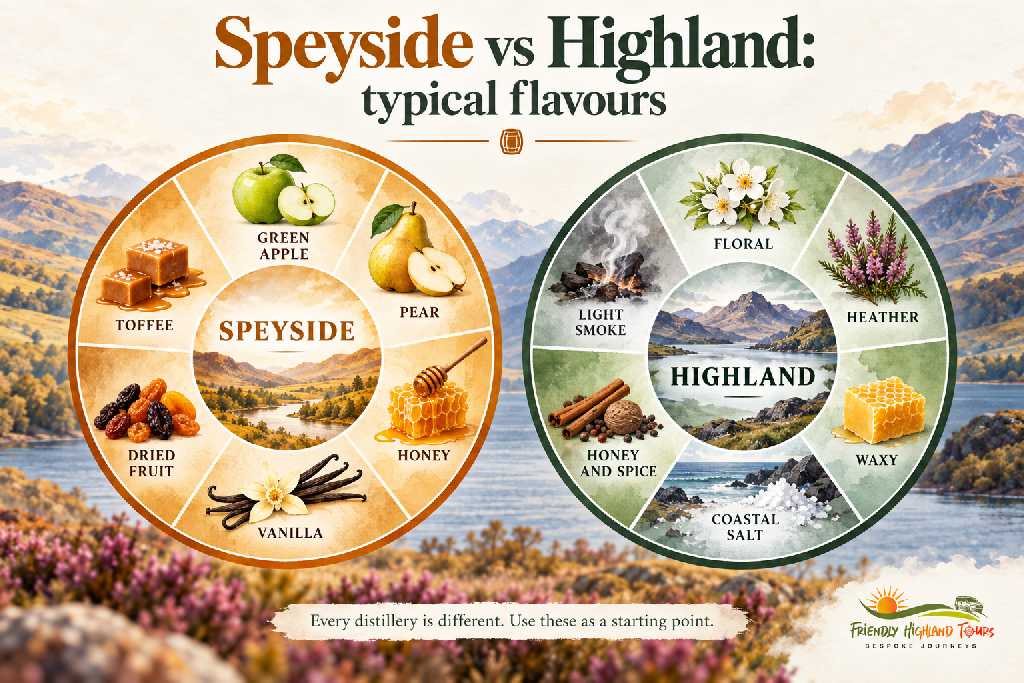
Speyside tends to have a more recognisable character. Highland whisky changes much more from one part of the region to another.
Treat these descriptions as a starting point. Stills, yeast, peat and casks all affect the whisky in your glass.
The Typical Speyside Character
Many Speyside malts have notes of green apple, pear, honey and vanilla.
Sherry-cask maturation also plays an important part in the region. It can bring dried fruit, toffee and Christmas cake notes. Macallan, Aberlour and Glenfarclas are examples of this richer character.
Speyside is not all the same. Mortlach and Craigellachie produce heavier spirits. Benromach in Forres also uses a light touch of peat smoke.
The Typical Highland Character
Highland whisky changes depending on the area you visit.
- North and east coast: Glenmorangie near Tain produces a light and floral spirit. Clynelish at Brora is known for its waxy and honeyed texture. Old Pulteney in Wick has a salty coastal character.
- Near Inverness: The Singleton of Glen Ord is fruity and smooth. Tomatin has a softer character across much of its core range.
- Central Highlands: Dalwhinnie is light and heathery. Blair Athol and Aberfeldy lean more towards honey and spice.
- Highland islands: Highland Park on Orkney and Talisker on Skye bring smoke and sea spray into the mix.
What This Means for Your Tasting
Speyside is a good option for guests who already enjoy sweet, fruity or sherried whisky.
The Highlands offer more contrast from one dram to the next. Guests who are still finding their preferences may enjoy tasting one whisky from each region.
My tip: Tell me whether you prefer smooth, rich or smoky whisky before your tour. I can suggest distilleries that match your taste.
How to Taste Whisky at a Distillery
The distillery guide will lead the tasting. These simple steps can help you notice more in each glass.
- Look at the colour. Much of it comes from the cask. A deep amber whisky may have spent time in sherry wood.
- Nose the whisky gently. Keep your mouth slightly open. Strong alcohol can quickly overpower your sense of smell.
- Take a small sip. Hold it on your tongue for a few seconds before swallowing.
- Add a few drops of water. Taste it again and notice whether new aromas appear. Water can bring out more character in cask-strength whisky.
- Notice the finish. This is how long the flavour remains after you swallow.
There is no wrong way to enjoy a dram. Distillery guides welcome questions from beginners. I often find that a relaxed conversation teaches guests more than formal tasting notes.
Whisky Terms You May Hear at a Distillery
- Single malt: Whisky made only from malted barley at one distillery.
- Blended Scotch: A mix of malt and grain whiskies from several distilleries.
- New make spirit: The clear spirit produced before it goes into a cask.
- Age statement: The age of the youngest whisky in the bottle. Scotch must mature for at least three years in oak casks in Scotland.
- Cask strength: Whisky bottled without added water, often above 50% alcohol.
- Sherry cask: A cask that previously held sherry. It can add dried fruit and spice.
- Bourbon cask: A cask that previously held American bourbon. Vanilla and coconut notes are common.
- Peat: Partly decayed plant material burned to dry the barley. It can give whisky a smoky flavour.
- Angel’s share: Whisky lost through evaporation during maturation.
- Dram: The everyday Scottish word for a measure of whisky.
Planning a Whisky Trip From Inverness
How the Two Regions Work for Visitors
The table below looks at both regions from the point of view of someone staying in Inverness.
| Factor | Speyside | Highlands Near Inverness |
| Drive from Inverness | Around 40 minutes to Forres and about 1 hour 20 minutes to Dufftown | Around 20 to 25 minutes to Glen Ord or Tomatin and about 50 minutes to Tain |
| Distillery density | Very high, often 2 to 5 miles apart | Lower, often 15 to 30 miles apart |
| Major visitor centres | Glenfiddich, The Glenlivet, The Macallan, Glen Grant | Glen Ord, Glenmorangie, Tomatin |
| Scenery | Wooded river valleys, farmland and small stone towns | Firths, coastline, mountains and moorland |
| Other places to visit | Speyside Cooperage, Speyside Way, Ballindalloch Castle | Culloden, Loch Ness, Dornoch, the Black Isle |
| Busiest period | Spirit of Speyside Festival in late April and early May | July and August, plus North Coast 500 traffic |
| Best fit | Whisky enthusiasts | Mixed groups and visitors combining whisky and sightseeing |
Speyside takes longer to reach from Inverness. Once you arrive, many distilleries are close together.
The Highlands work better for shorter trips and mixed groups. They also leave more time for sightseeing during the day.
Highland Distilleries Near Inverness
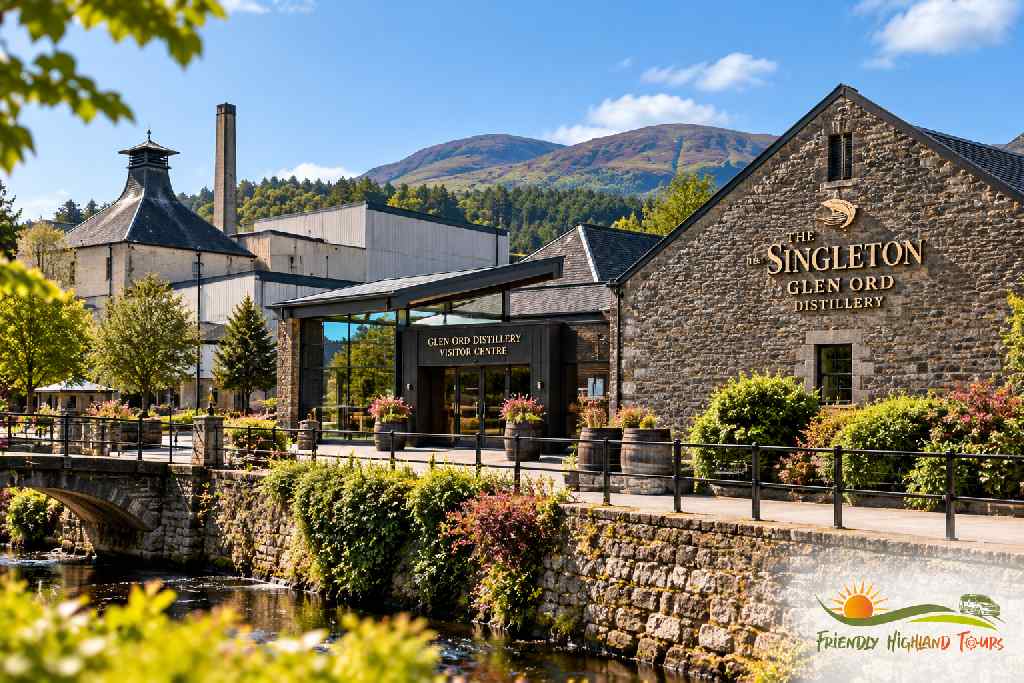
The Highland distilleries are the easiest to reach from Inverness. I often take guests to them when they want a shorter whisky day.
Glen Ord
Glen Ord is on the edge of Muir of Ord, around 15 miles west of Inverness. The drive takes about 25 minutes.
The distillery has made whisky since 1838 and produces The Singleton of Glen Ord.
The visitor centre opened in 1994. Tours include an accessible route for most wheelchair users. I recommend booking ahead during busier months because tasting tours can fill quickly.
My tip: The Singleton tour at Glen Ord is a good introduction to northern whisky.
Tomatin
Tomatin is around 16 miles south of Inverness, just off the A9.
It was once among Scotland’s largest malt distilleries. Its scale still makes the production tour impressive.
The location also works well for guests travelling towards Aviemore or Speyside.
Further south, Kinrara near Aviemore and Dalwhinnie can fit into a private tour of the Cairngorms National Park. Dalwhinnie’s whisky and chocolate pairing is popular among guests who are new to whisky.
The Dornoch Firth Distilleries
A drive north of Inverness brings you to several Highland distilleries.
- Glenmorangie near Tain is around 50 minutes away.
- Balblair at Edderton is one of Scotland’s oldest working distilleries.
- Dalmore at Alness is known for rich sherried whisky.
- Clynelish at Brora is around 1 hour 15 minutes away.
The terrace view across the Dornoch Firth at Glenmorangie is one of my favourite stops. This route can also include Dornoch, its cathedral and long sandy beach.
You can combine the distilleries with the wider northern coast on my North Highland private tour.
Cruise passengers arriving at Invergordon are only a few miles from Dalmore. Glenmorangie and Balblair are also within reach during a day in port. My Invergordon cruise tours can include a distillery visit during your time ashore.
Speyside Distilleries and the Malt Whisky Trail
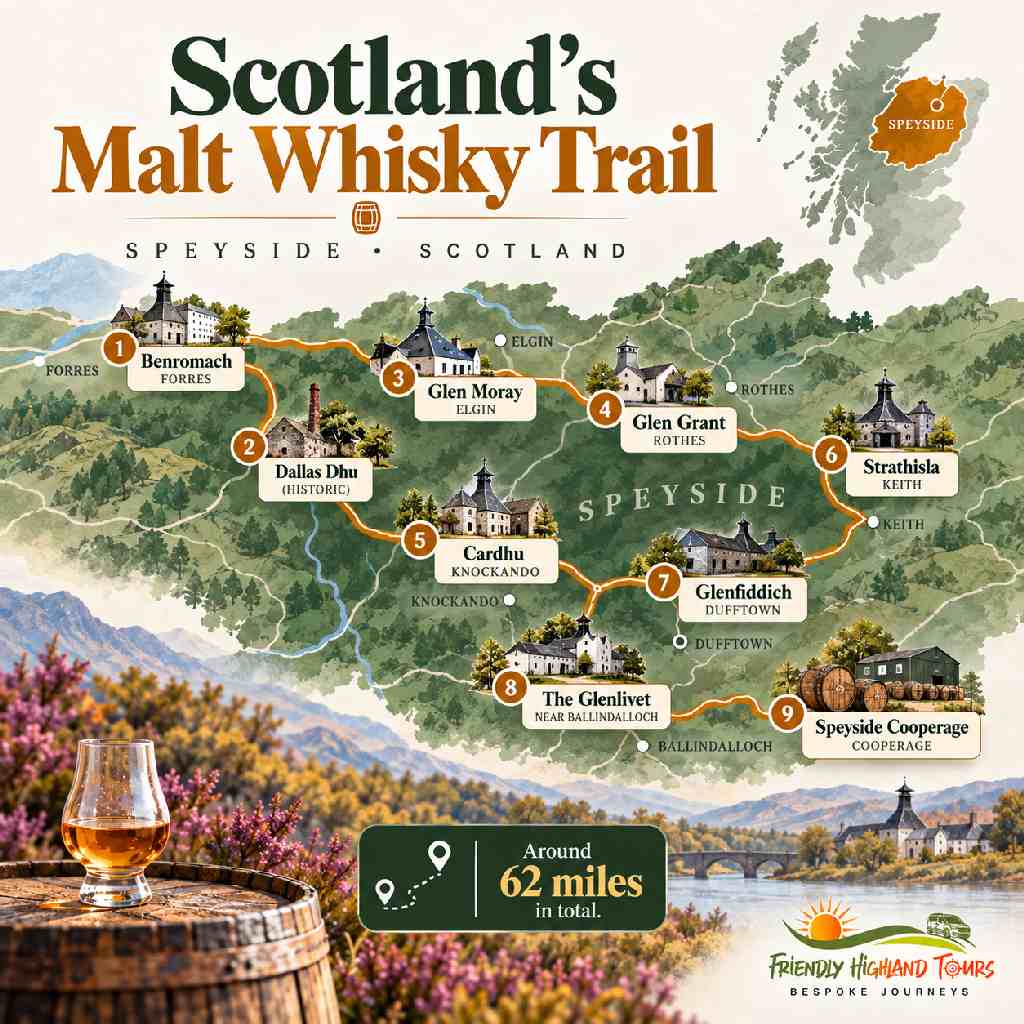
Speyside offers a huge choice of distillery visits.
Scotland’s Malt Whisky Trail is a useful place to start. The signposted route covers around 62 miles. It links seven working distilleries, one historic distillery and a working cooperage.
- Benromach, Forres: The closest Speyside distillery to Inverness.
- Dallas Dhu, near Forres: A preserved historic distillery that no longer produces whisky.
- Glen Moray, Elgin: A riverside distillery with a visitor centre.
- Glen Grant, Rothes: Known for its Victorian gardens as much as its whisky.
- Cardhu, Knockando: The Speyside home of Johnnie Walker blends.
- Strathisla, Keith: One of the oldest operating distilleries in the Highlands. Its twin pagoda roofs make it particularly photogenic.
- Glenfiddich, Dufftown: A large visitor centre and a popular first distillery tour.
- The Glenlivet, near Ballindalloch: Set in hill country and offering several tasting options.
- Speyside Cooperage, near Craigellachie: A place to watch coopers build and repair whisky casks by hand. Pasted markdown
Several other popular distilleries are outside the official trail.
The Macallan has a modern visitor building topped by a turf roof. Aberlour and Glenfarclas have a strong focus on sherry-cask whisky. Cairn near Grantown-on-Spey is a newer addition to the region.
My tip: The Macallan can fill quickly, so book early. Balvenie tours next to Glenfiddich are also limited. Let me know early when you would like to include either one.
Not every Speyside distillery welcomes visitors. Some mainly produce whisky for blends. Check before travelling.
Dufftown, Aberlour and Craigellachie all work well as bases for a longer whisky stay.
Which Whisky Region Is Better for Your Trip?
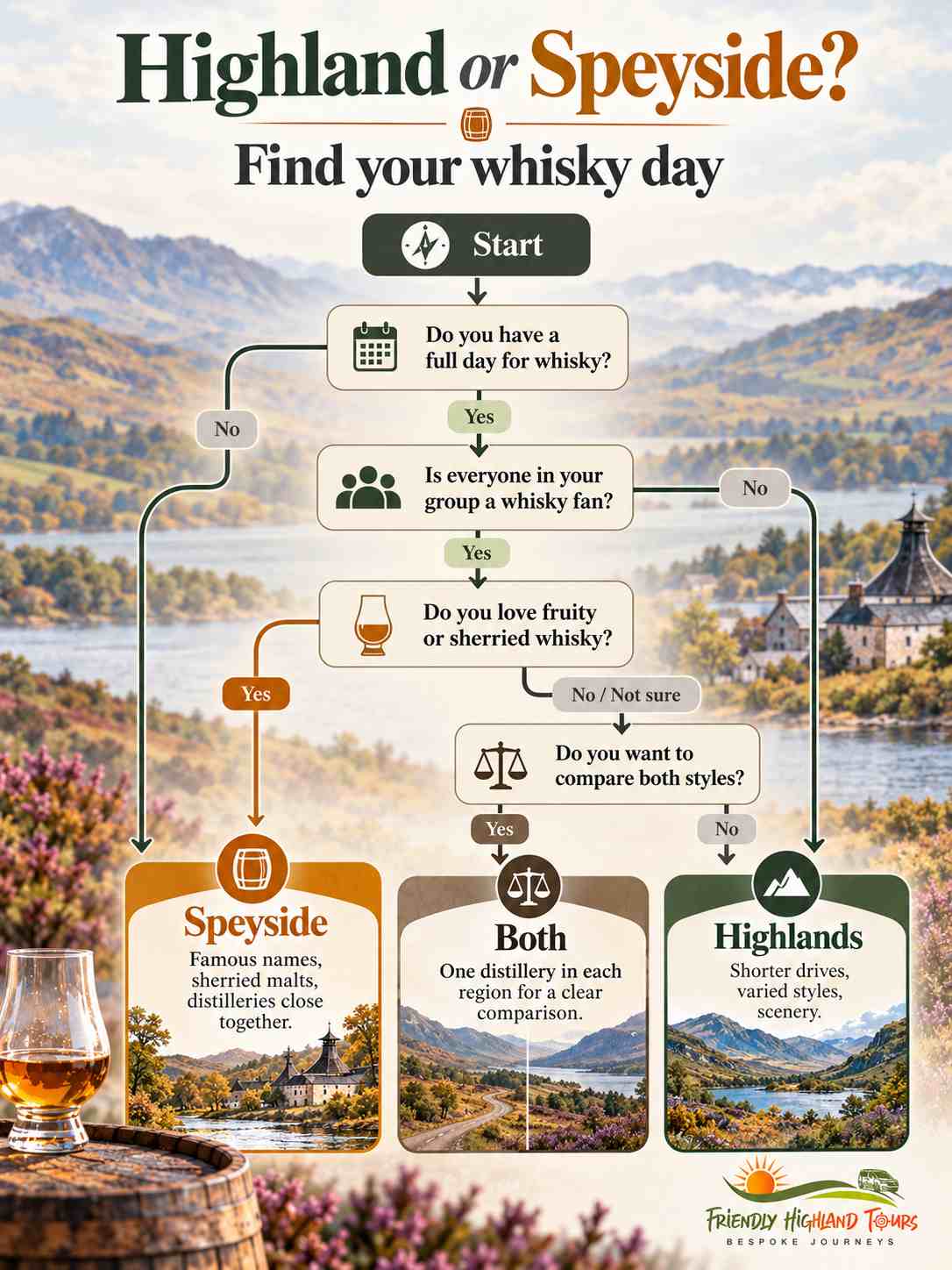
The right choice depends on your time, where you are staying and the people travelling with you.
Choose Speyside
Speyside makes sense for a dedicated whisky day.
It works particularly well for visitors who want famous names such as Glenfiddich, The Macallan or The Glenlivet.
A full day gives you enough time to make the journey worthwhile. An overnight stay in Dufftown, Aberlour or Craigellachie opens up even more options.
The Spirit of Speyside Whisky Festival is another reason to focus on the region during festival week.
Choose the Highlands
The Highlands make more sense for a shorter trip from Inverness.
They also work well for mixed groups. Castles, coastline and Loch Ness can all become part of the same day.
This option also fits naturally into a wider North Coast 500 journey.
Choose Both Regions
A full day can include one Highland distillery and one or two Speyside stops.
This gives you a direct comparison without making the itinerary too busy. It works particularly well for visitors who want whisky to remain the main focus of the day but still enjoy some variety on the road.
How Long to Spend in Each Region
| Time Available | Suggested Plan |
| Half a day | Glen Ord or Tomatin from Inverness, plus time for Culloden or the Black Isle |
| One full day | One Highland distillery in the morning and one or two Speyside visits in the afternoon |
| Two days | One day in Speyside plus a day around the Dornoch Firth |
| Three nights or more | Stay in Dufftown or Aberlour and visit smaller distilleries and local tastings |
One carefully planned whisky day is often enough during a wider Highland holiday.
Dedicated whisky travellers may prefer a night or two in Speyside.
Planning a Full Whisky Day
Can You Visit Highland and Speyside Distilleries in One Day From Inverness?
A day from Inverness can include a Highland distillery in the morning and Speyside in the afternoon.
Two or three distillery visits is a sensible total. Most tours last between one hour and ninety minutes.
You also need time for driving, lunch and the visitor shop at each stop.
A Sample Route From Inverness
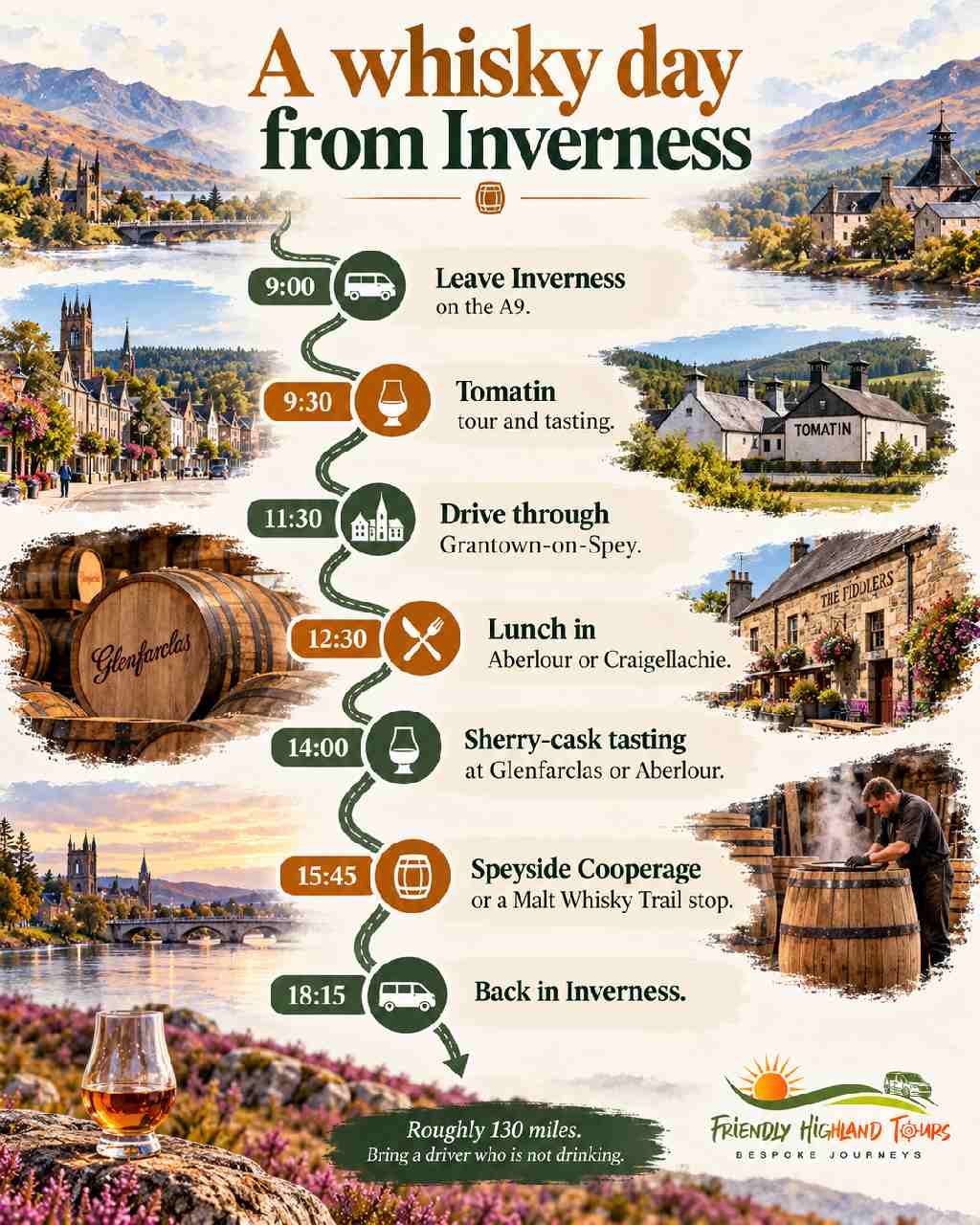
- 9:00: Leave Inverness and travel south on the A9.
- 9:30: Tour Tomatin. Glen Ord also works well as an alternative first stop.
- 11:30: Travel towards Grantown-on-Spey and the Spey valley.
- 12:30: Stop for lunch in Aberlour or Craigellachie.
- 14:00: Visit Glenfarclas or Aberlour for a sherry-cask tasting.
- 15:45: Visit Speyside Cooperage or another Malt Whisky Trail stop.
- 17:00: Return to Inverness through Forres. Arrival is around 18:15.
The route covers roughly 130 miles. A dedicated driver makes the day much easier for everyone.
Self-Drive, Group Coach or Private Tour?
Self-drive
You control the route and timings. The driver cannot take part in the tastings.
Group coach
These tours usually cost less. The route is fixed and the number of distillery stops may be limited.
Private whisky tour
Everyone can take part in the tastings while a local guide handles the driving and timings. Sightseeing can also become part of the route.
On my private whisky tour, you can choose distilleries in the northern Highlands, southern Highlands or Speyside.
I plan the route, timings and a lunch stop. Distillery tickets are booked separately. A first tasting around 10:00 and a second around 14:00 usually works well.
What to Know Before a Distillery Visit
These are the practical points I mention to guests before a whisky day.
Book Popular Tours Early
Premium tastings at The Macallan, Glenfiddich and Glen Ord can sell out weeks ahead during summer.
Festival week can fill even earlier.
Smaller distilleries may accept walk-ins outside the busiest months. Calling ahead can still save a wasted journey.
Check Winter Opening Times
Many distilleries reduce their opening hours between October and March.
Glenfarclas, for example, runs weekday tours during the winter months.
Some distilleries close for maintenance during the year. This period is known in the industry as the silent season.
Understand Scotland’s Drink-Drive Rules
The legal limit in Scotland is 50 milligrams of alcohol per 100 millilitres of blood.
Many distilleries offer a driver’s dram. This is a small sample bottle that you can take away and enjoy later.
Ask about this before your visit.
Travelling With Children
Age limits vary between distilleries.
Some accept children from eight years old. Glenfarclas sets its limit at ten and Speyburn at twelve.
Visitors under 18 cannot taste whisky. Many visitor centres offer a soft drink or juice instead.
My family guide to private tours in the Scottish Highlands has more ideas for days out with children.
What to Wear and Bring
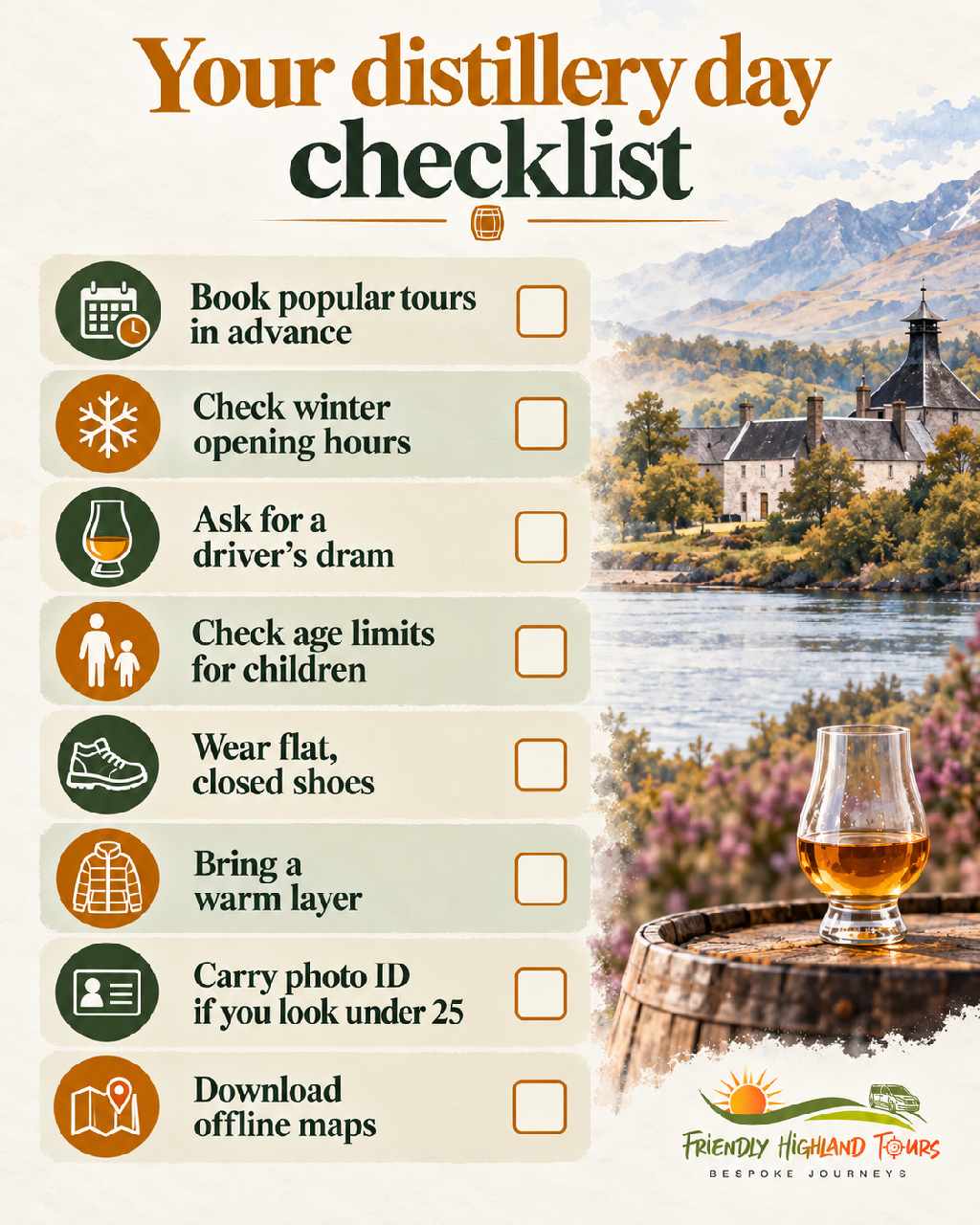
- Flat, closed shoes for metal walkways and wet floors.
- A warm layer for cooler warehouses.
- A lighter layer for the warmer stillhouse.
- Photo ID when you look under 25.
Some stillhouses do not permit phones or cameras because of flammable alcohol vapour.
Your guide will explain where photography is allowed.
Distillery Ticket Prices
Distillery tickets are separate from the cost of a private tour, and you book them directly with each distillery. Standard distillery tours in both regions usually cost between £12 and £30 per adult. Premium tastings and warehouse experiences often cost £50 to £150 or more. Prices change each season, so check with each distillery before you book.
Winter Roads
The A939 between Tomintoul and Cock Bridge can be one of the first roads in Britain to close during snow.
The A939 over Dava Moor can also become icy during colder weather.
During winter, I usually take the A96 coast road through Nairn and Forres into Speyside.
Check Traffic Scotland for live road updates before setting off. My guide on whether the Scottish Highlands are worth visiting in winter has more advice for colder trips.
Maps, Fuel and Mobile Signal
Mobile signal can be unreliable around Glenlivet and Tomintoul.
Download offline maps before leaving.
Fuel is easier to find in Inverness, Elgin and Aviemore. Some rural petrol stations close early.
Tours in Other Languages
Most distillery tours run in English.
Some larger visitor centres also provide tours or printed information in French, German, Spanish or Japanese.
Ask the distillery about language options before booking.
Travelling With Non-Drinkers
Non-drinkers can still enjoy the production process, mash house aromas and warehouses.
Some distilleries offer soft drinks, chocolate pairings or a driver’s pack.
A few also charge less for guests who do not take part in the tasting.
Taking Whisky Home From Scotland
Pack bottles in your hold luggage and protect them using clothing or a padded bottle bag.
Many distillery shops sell protective sleeves. Some can arrange shipping to certain countries.
Duty-free allowances depend on your destination.
| Arriving In | Duty-Free Spirits Allowance Per Adult |
| United States | 1 litre, aged 21 and over |
| Canada | 1.14 litres, or 40 fluid ounces |
| Australia | 2.25 litres of all alcohol combined, aged 18 and over |
| European Union countries | 1 litre of spirits above 22% alcohol |
You may be able to bring more than the allowance after declaring it and paying the relevant duty.
Customs rules can change. Check the official guidance for your home country before flying.
Frequently Asked Questions
Can I Reach Speyside Distilleries From Inverness on Public Transport?
It is possible, although the journey needs some planning.
Trains between Inverness and Aberdeen stop at Forres, Elgin and Keith. Each town has distilleries within walking distance or a short taxi journey.
Local buses connect Elgin to Rothes, Aberlour and Dufftown. Services can be less frequent on Sundays and during the evening. Pasted markdown
When Is the Spirit of Speyside Whisky Festival in 2027?
The 2027 Spirit of Speyside Whisky Festival runs from 28 April to 3 May.
Tickets for individual events usually go on sale in February. Popular events can sell out quickly.
Accommodation in Dufftown and Aberlour also fills early during festival week.
Is Speyside Whisky Smoother Than Highland Whisky?
Speyside whisky is not automatically smoother.
Smoothness depends more on age, cask type and bottling strength than the region.
A 12-year-old sherried Speyside malt and a 12-year-old Glenmorangie can both feel gentle to someone new to whisky.
Which Is the Oldest Distillery in Each Region?
Glenturret in Perthshire claims to be Scotland’s oldest working distillery. Its whisky-making history dates back to 1763.
Strathisla in Keith began production in 1786.
Both are open to visitors and appeal to people interested in whisky history.
Can I Walk Between Distilleries in Speyside?
Parts of the Speyside Way can link distillery stops.
The section between Craigellachie and Aberlour is relatively flat. Several distilleries are close to the route.
It can be a pleasant way to link two tastings without using a car.
Can I Buy Whisky at a Distillery That I Cannot Find in Shops?
Many distilleries sell bottles that are only available from their visitor centre.
Some also offer hand-fill bottles taken directly from a single cask.
Check the customs allowance for your home country before buying. Pack the bottles carefully in your hold luggage for the flight.
Is Autumn a Good Time for a Whisky Trip?
Autumn is one of my favourite times for a whisky day.
Tour groups are smaller and accommodation can be easier to find. The Spey valley also turns gold and copper as the leaves change.
Daylight becomes shorter later in the season. Plan your driving around the earlier sunset.
Is Speyside Worth Visiting for One Day in the Highlands?
Speyside is worth a full day when whisky is one of the main reasons for your trip.
A half-day at Glen Ord or Tomatin leaves more time for Loch Ness, Culloden or the coast.
Many of my guests with one full day choose one distillery near Inverness and another in Speyside.
My Advice on Highland and Speyside Whisky

Both regions can make a great whisky day. The better choice depends on the kind of trip you want.
Speyside is a strong option for guests who want famous distilleries such as Glenfiddich and The Macallan. It also works well for people who enjoy rich, sherried whisky and want several distilleries close together.
The Highlands are easier for a shorter day from Inverness. They also work well for mixed groups, because you can combine whisky with coastline, castles or Loch Ness.
You do not always have to choose one region. A full day can include a Highland distillery in the morning and a Speyside tasting later in the day. That gives you a simple way to compare the two regions for yourself.
Think about how much time you have, who is travelling with you and the whisky you already enjoy. When you are ready to plan your day, get in touch with me and tell me what you like. I will help you choose the distilleries and plan a route that works for your trip.
Aleman is a local guide who leads Friendly Highland Tours. He has lived in the Highlands for over thirty years. He knows the land through real journeys on quiet roads, lochs, and glens. Families and small groups travel with him for calm days and warm stories. Each guide he writes comes from experience on the road and careful consideration.