



Content
Winter is the season that makes people think twice before booking a Highland trip. My name is Aleman, and I have spent thirty years guiding visitors through the Highlands in all kinds of weather. Every October, guests start asking me the same question. Is winter worth visiting, or is it better to wait until spring? I have spent years driving these roads during the colder months. Here is what I tell my guests.
What to Expect During a Highland Winter
Winter is worth visiting. The Highlands are different from the summer months and your trip needs more planning. The scenery and peaceful atmosphere make the extra preparation worthwhile. You can also leave the planning to someone who knows the roads and local conditions. A custom private tour takes that pressure off your shoulders.
My Honest Answer
- Winter runs from December through February. November marks the transition from autumn.
- Snow, quiet roads, warm fires and peaceful surroundings make winter one of the most rewarding times to visit.
- Some businesses close during winter. Daylight is limited and the weather can change without warning. Your trip will need proper planning.
What Winter Actually Means Here
Meteorologists mark Highland winter as December, January and February. For many locals, November feels like the real turning point. The last of the tourist season comes to an end and the first frosts begin to appear.
November still has some autumn character. Trees hold on to their last leaves in sheltered glens and the days are not yet at their shortest.
December brings a noticeable change. Frost settles on many mornings and the first proper snow usually arrives on higher ground.
Weather and Temperatures Through Winter
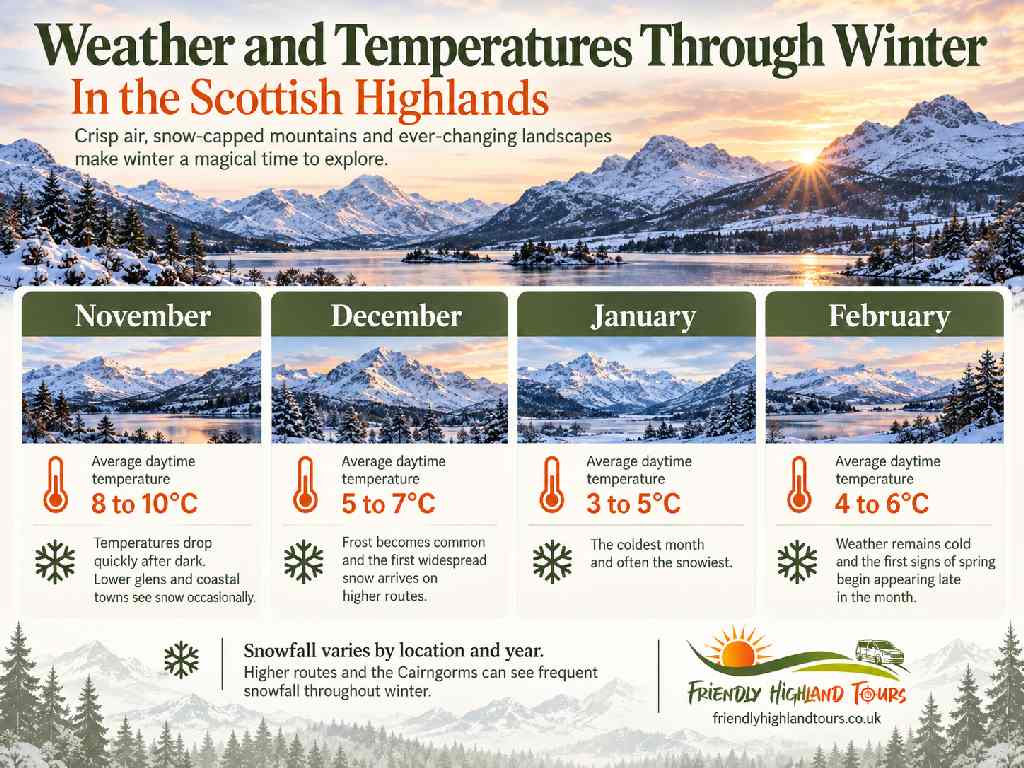
Average daytime temperatures across the Highlands stay close to freezing during the coldest months.
- November: Highs around 8 to 10°C. Temperatures drop quickly after dark.
- December: Highs around 5 to 7°C. Frost becomes common and the first widespread snow arrives on higher routes.
- January: Highs around 3 to 5°C. This is the coldest month and often the snowiest.
- February: Highs around 4 to 6°C. The weather remains cold but the first signs of spring begin appearing late in the month.
Rain, sleet and snow are all part of a Highland winter. You might even experience all three in a single afternoon.
Snowfall varies across the region. Lower glens and coastal towns see snow occasionally. Higher routes and the Cairngorms can experience thirty or more days of snowfall across the season.
Daylight Hours Through Winter
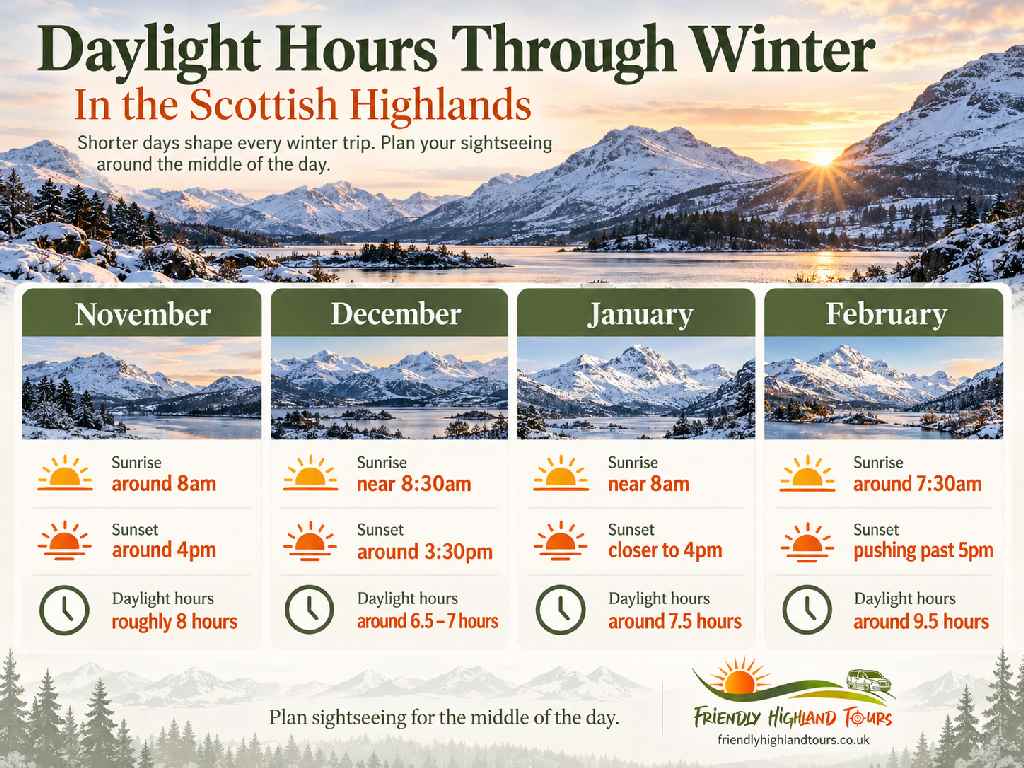
Daylight drops quickly once November begins. This makes a big difference to how much you can fit into each day.
- November: Roughly 8 hours of daylight. Sunrise is near 8am and sunset is around 4pm.
- December: The shortest days of the year have around 6.5 to 7 hours of daylight. Sunrise is near 8:30am and sunset is around 3:30pm.
- January: Daylight starts getting longer again. You have around 7.5 hours of daylight and sunset moves closer to 4pm.
- February: Days become noticeably longer with around 9.5 hours of daylight. Sunset moves past 5pm.
Plan your sightseeing around the middle of the day. Outdoor visits need to fit within the limited daylight hours. This matters most in December.
The Honest Downsides
Winter in the Highlands has its challenges. Here are a few things I always tell my guests before they book.
- Smaller businesses close. Independent cafes, some restaurants and a number of visitor attractions shut for the season. This is more common in quieter villages. Larger towns and cities offer more options.
- Darkness sets in early. There is less time for sightseeing and outdoor activities. You need to plan your day around the earlier sunset.
- Weather changes quickly. A clear morning can turn to sleet within an hour. Roads over higher passes sometimes close for safety after heavy snow.
- Some places become harder to reach. Poor weather can affect access to certain scenic routes and attractions. You may need to change your itinerary at short notice.
None of these things makes winter a poor choice. You just need to prepare more carefully than you would for a summer trip.
Families considering a winter visit may find our family guide to private Highland tours useful for planning around shorter days.
Planning Your Highland Trip in Winter
Snow, Driving and Road Conditions
Winter driving in the Highlands takes more care than driving during other seasons. It is worth understanding the conditions before setting off.
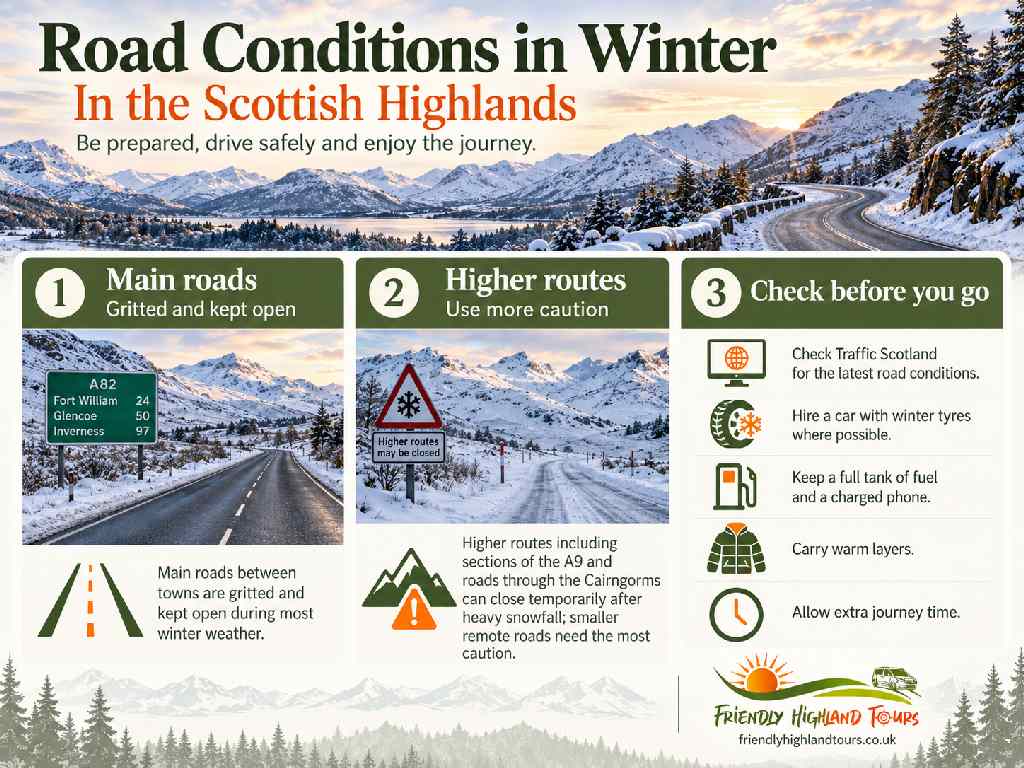
- Higher routes can close temporarily after heavy snowfall. This includes sections of the A9 and roads through the Cairngorms.
- Check Traffic Scotland for live road updates before setting out on a long winter drive.
- Hire a car with winter tyres where possible. Standard tyres can struggle on icy or snow-covered roads.
- Keep a full tank of fuel and a charged phone. Carry warm layers in the car in case a road closure delays your journey.
- Leave extra time for every journey. A drive that takes an hour in summer can take longer once ice or snow affects the roads.
Main roads between towns are gritted and kept open during most winter weather. Smaller roads need more caution. This is particularly important on higher routes and in remote areas.
Winter Opening Hours and Travel Services in the Highlands
- Attractions: Several Historic Environment Scotland sites move to reduced winter hours or close for the season. Check opening times before travelling.
- Ferries: Ferry timetables are reduced during winter. Confirm sailing times well in advance when planning a trip to the islands.
- Cairngorm attractions: Some attractions operate reduced schedules depending on the conditions. This can include certain funicular and chairlift services.
- Restaurants and cafes: Independent cafes and restaurants in smaller villages often close for a break during January. Larger towns offer more dining options during this period.
Packing Essentials for a Highland Winter
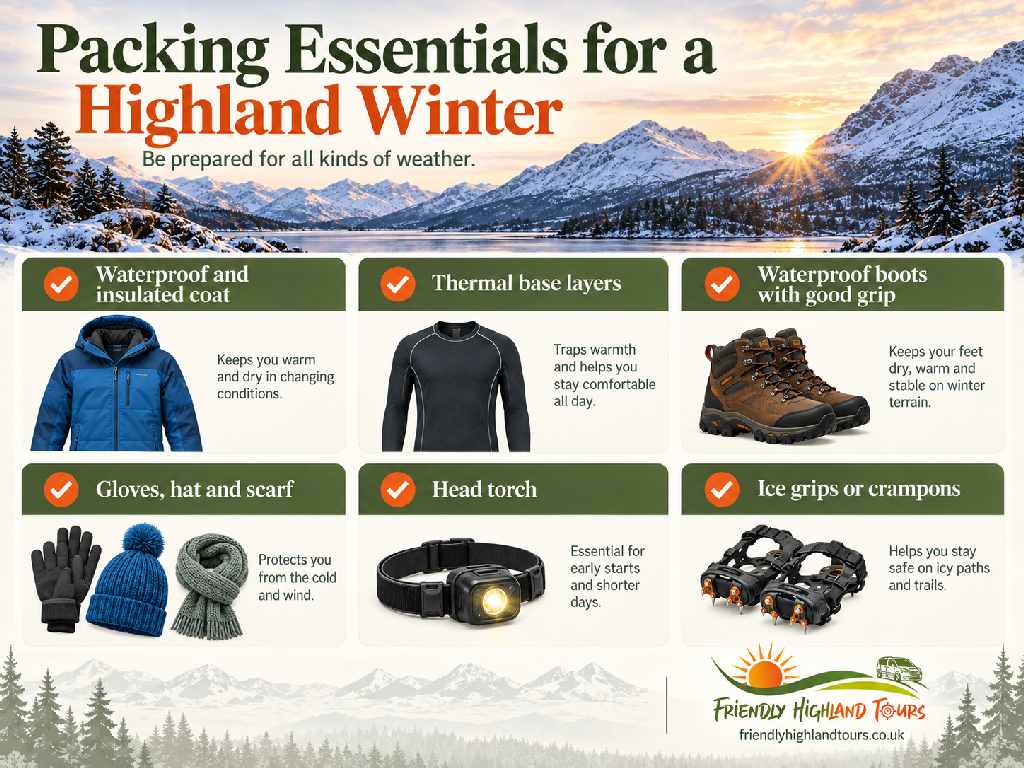
- Pack a proper insulated and waterproof coat. A light shower jacket will not be enough for cold and wet Highland weather.
- Bring thermal base layers. Temperatures can change considerably between indoor and outdoor spaces.
- Choose waterproof and insulated boots with good grip. They will help on icy pavements and snow-covered paths.
- Pack gloves, a hat and a scarf. Wind chill can make the temperature feel much colder.
- Carry a head torch for the early evenings. This is particularly useful during December.
- Bring ice grips or crampons for your footwear. They can be useful for walks on higher ground or icy paths.
Why Visit the Scottish Highlands in Winter?
There are plenty of reasons to visit the Highlands during winter. The scenery changes completely and you get to see a quieter side of Scotland.
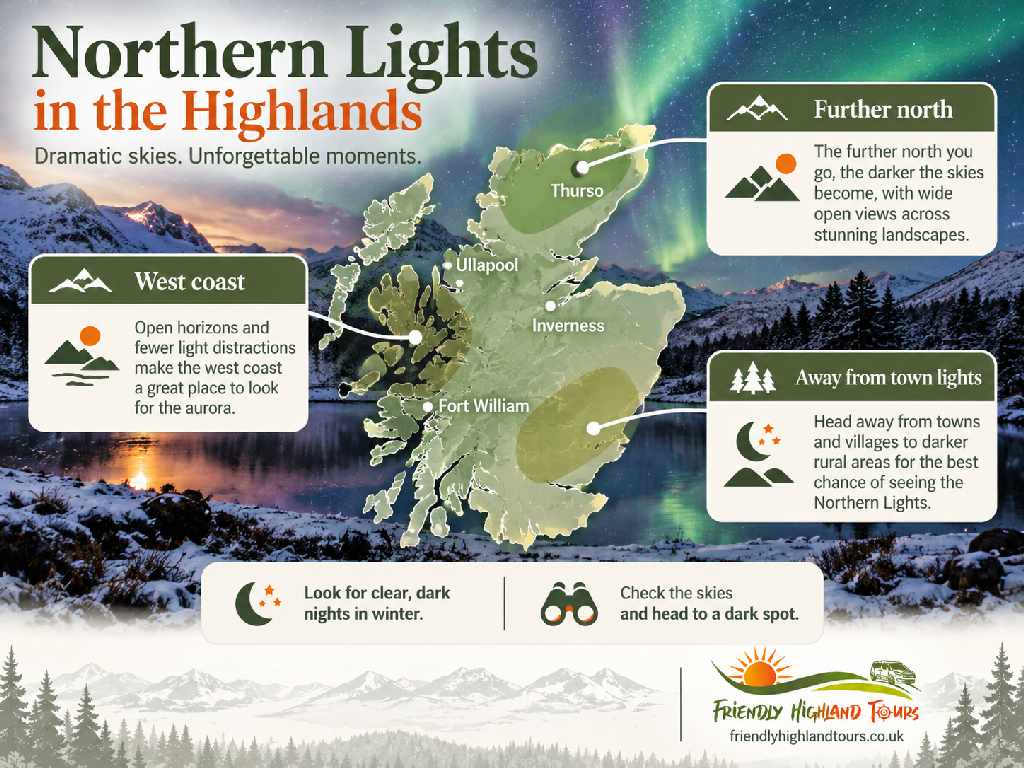
- You have a chance of seeing the Northern Lights. Clear and dark nights away from town lights give you a chance of seeing them. Your chances can be better further north and on the west coast.
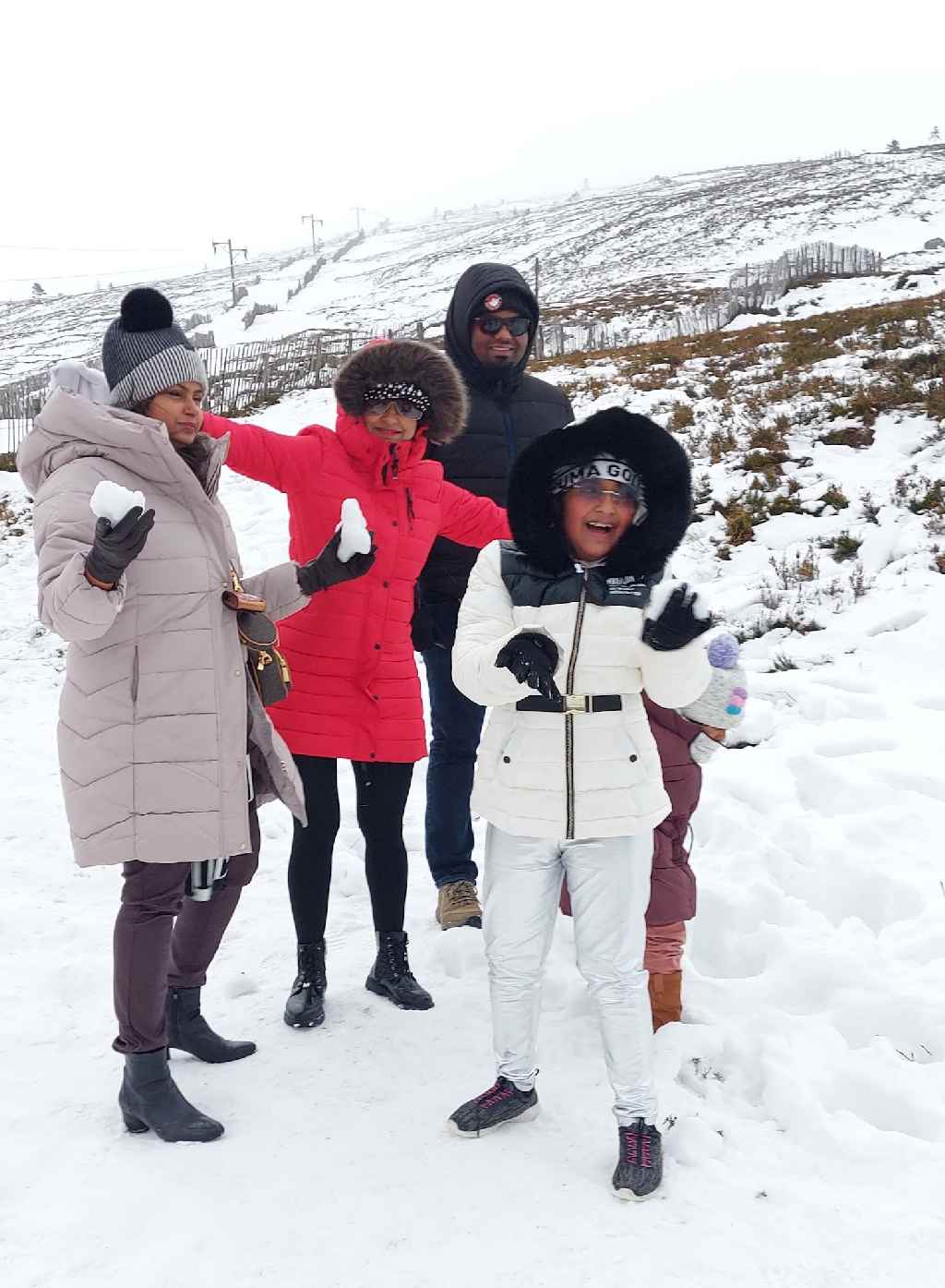
- Snow transforms the scenery. Glen Coe, the Cairngorms and Skye look completely different under snow. Our Isle of Skye private tour is a great way to see the island during winter. Photographers also travel to the Highlands to capture these snowy landscapes.
- Popular places are much quieter. Attractions such as Urquhart Castle on Loch Ness and the NC500 receive far fewer visitors than they do in summer.
- Accommodation and tour prices often fall. Many businesses offer some of their lowest rates of the year during winter. Christmas and Hogmanay are the main exceptions.
- The Highlands feel peaceful. You can visit beautiful places without the crowds of summer. Many locals describe winter as the time when the region feels most like itself.
Wildlife in Winter
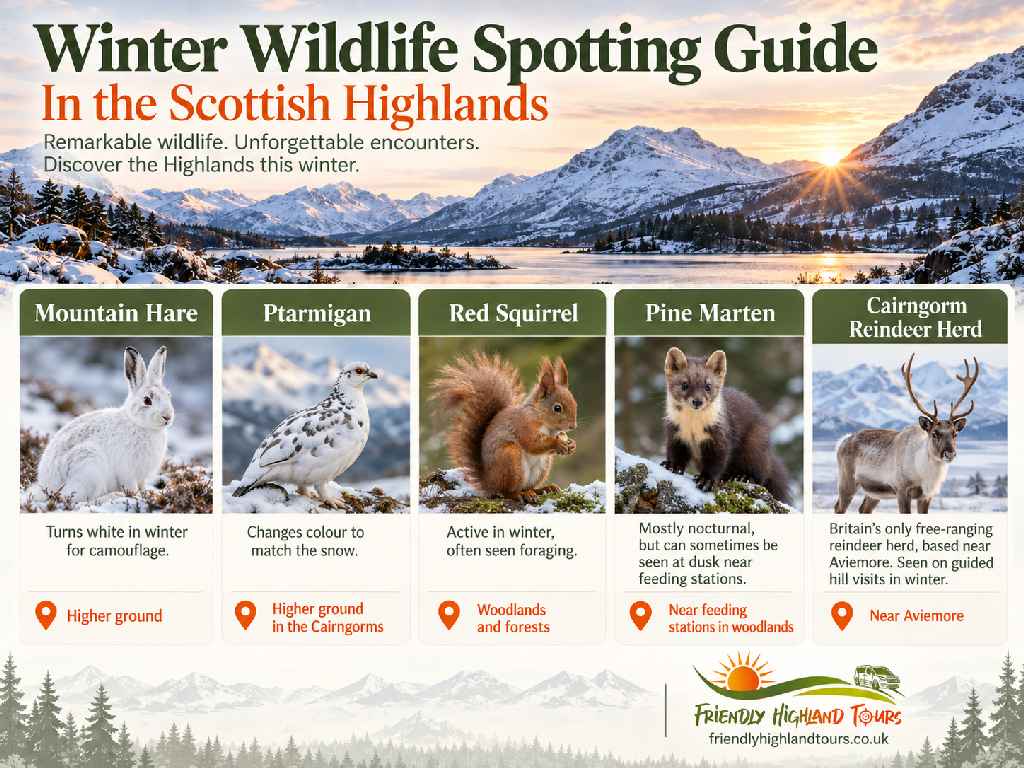
Wildlife watching during winter is quite different from the deer rut in October. There is still plenty to see but you may need a little more patience.
- Red squirrels remain active during winter. Their red coats are easier to spot against bare branches.
- Pine martens are mostly nocturnal. You can sometimes see them at dusk near feeding stations run by local estates.
- Mountain hares turn white during winter. Seeing one against the snow is one of the more striking wildlife experiences of the season.
- Ptarmigan also change colour to match the snow. Both species are easiest to find on higher ground in the Cairngorms.
- Stags remain visible on lower ground during winter. The dramatic behaviour of the autumn rut has already ended.
- The Cairngorm Reindeer Herd is Britain’s only free-ranging reindeer herd. It is based near Aviemore and visitors can see the animals during guided hill visits throughout winter.
Food and Drink in Winter
Highland food changes during the colder months. Warm and filling dishes become popular as temperatures fall.
- Cullen skink is a smoked haddock and potato soup served in restaurants and pubs across the region.
- Venison stew and game pie become popular alternatives to the lighter dishes served during summer.
- Haggis, neeps and tatties remain a genuine winter staple. It is a traditional Scottish meal that locals still eat.
- Shortbread, tablet and clootie dumpling are some of the sweeter treats you can try during a Highland winter.
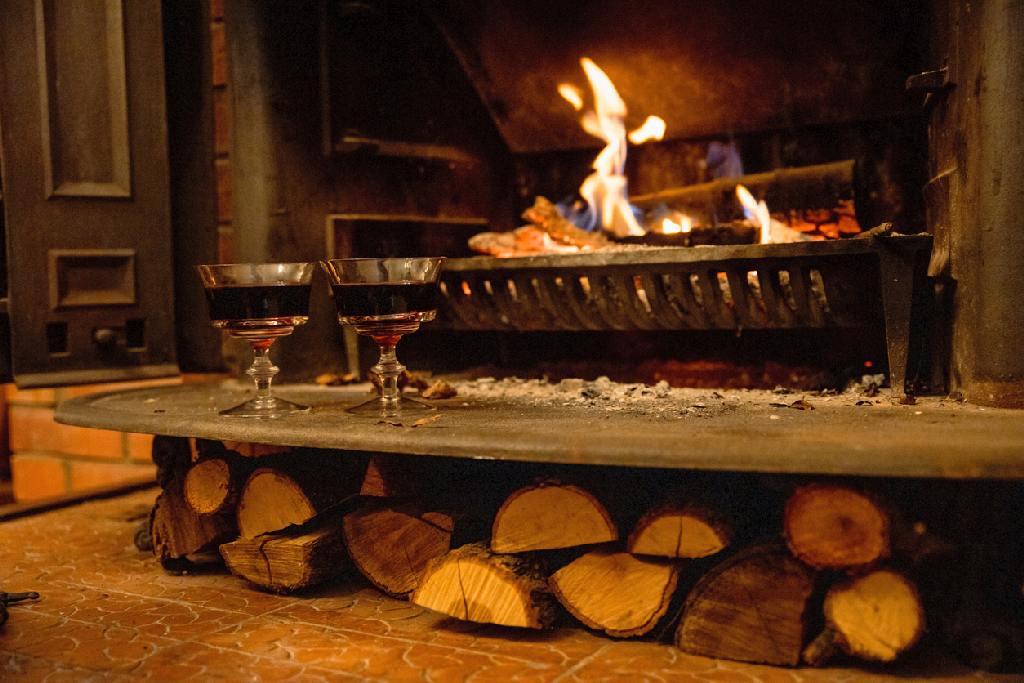
- Whisky becomes a popular choice during colder weather. A private whisky tour can be a lovely way to spend a winter day. You can visit distilleries and finish with a warming dram.
Early darkness means you may spend more time indoors during the evenings. Traditional pubs with open fires are a lovely place to finish the day.
Many Highland towns have at least one. I would recommend keeping some time free for a pub visit once your sightseeing is finished.
Events and Traditions
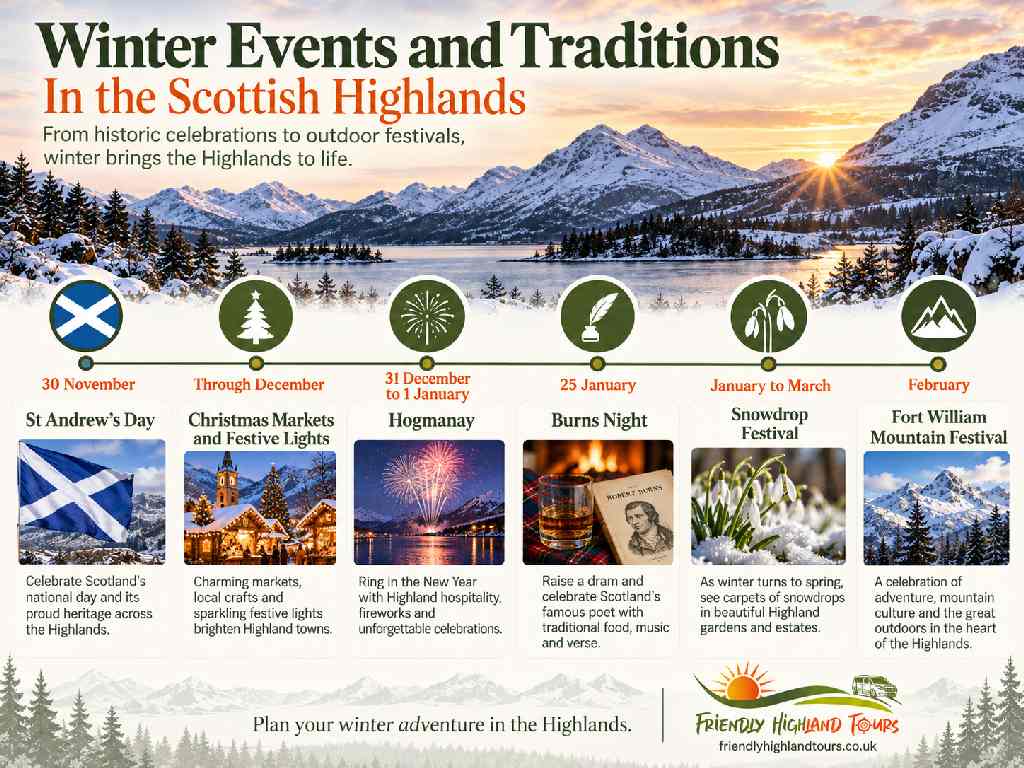
There are several events and traditions worth considering when planning a winter trip to the Highlands.
- St Andrew’s Day: Scotland celebrates its patron saint on 30 November. The day marks the unofficial start of the festive season across the country.
- Christmas markets and festive lights: Inverness and other Highland towns have festive decorations and Christmas markets during December.
- Hogmanay: Scotland celebrates the New Year with fireworks, torchlit processions and street parties. Edinburgh hosts the largest celebration. Smaller Highland towns also hold their own gatherings.
- Burns Night: Celebrated on 25 January, Burns Night honours Scotland’s national poet Robert Burns. Traditional suppers, whisky and poetry recitals take place across the Highlands.
- The Snowdrop Festival: The festival runs from January through March. Visitors can see some of the first flowers of the year in gardens across Scotland. Dunrobin Castle in the Highlands is one of the places to look out for.
- The Fort William Mountain Festival: This annual event takes place every February. It celebrates Highland mountain life and culture through talks, films and outdoor events.
Skiing in the Highlands
Scotland has five ski resorts and several are located within the Highlands.
- Cairngorm Mountain is near Aviemore and is one of the most accessible and recognised skiing destinations in Scotland. It is located within the wider Cairngorms National Park.
- Nevis Range is near Fort William and offers the highest lift-served skiing in the UK.
- Glenshee and The Lecht are two more Highland skiing options. Both offer a smaller and more relaxed skiing experience.
Skiing conditions change from year to year. The amount of snow depends on the season. Check current conditions before planning your trip around a particular date.
Which Winter Month Is Best for Visiting the Scottish Highlands?
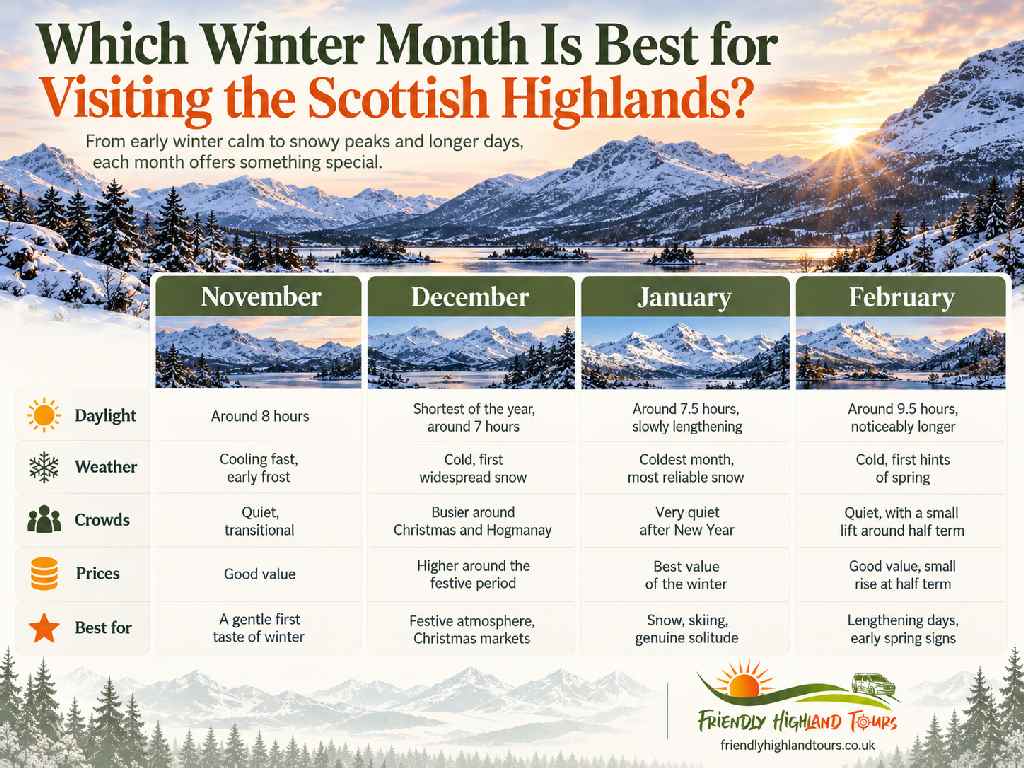
Each winter month has something different to offer. This comparison can help you decide which one works for your trip.
| Factor | November | December | January | February |
| Daylight | Around 8 hours | Shortest of the year, around 7 hours | Around 7.5 hours, slowly lengthening | Around 9.5 hours, noticeably longer |
| Weather | Cooling fast, early frost | Cold, first widespread snow | Coldest month, most reliable snow | Cold, first hints of spring late in the month |
| Crowds | Quiet, transitional | Busier around Christmas and Hogmanay | Very quiet after New Year | Quiet, with a small lift around February half term |
| Prices | Good value | Higher around the festive period | Best value of the winter | Good value, small rise at half term |
| Best for | A gentle first taste of winter | Festive atmosphere, Christmas markets | Snow, skiing, genuine solitude | Lengthening days, early spring signs |
Frequently Asked Questions
Is Scotland worth visiting in December specifically?
December is a lovely time to visit Scotland for its festive atmosphere. Christmas markets and festive lights bring life to towns such as Inverness. Hogmanay celebrations at the end of the month add to the experience.
Many attractions are also quieter outside the festive peak. This gives you more opportunities to visit popular places without the usual summer crowds.
Is the Highlands worth visiting in January?
January is one of the quietest months in the Highlands. It can be a good time to visit popular attractions without the usual crowds.
The cold weather and limited daylight will affect your plans. You may also need to make changes to your itinerary during periods of heavy snow.
Is November a good time to visit the Highlands?
November can be a good introduction to a Highland winter. Some autumn colour remains in sheltered areas and the coldest weather has not yet arrived.
You can still visit many popular attractions during November. Check their opening hours before travelling because some begin moving to winter schedules.
What are the Highlands actually like in winter, day to day?
Expect cold weather and the possibility of rain or snow. Some days are clear enough for outdoor sightseeing. Other days may be better spent visiting towns and indoor attractions.
I always recommend keeping your itinerary flexible. This gives you the chance to make the most of good weather without feeling disappointed when plans need to change.
Do I need a four-wheel-drive car to visit the Highlands in winter?
You do not need a four-wheel-drive car for most Highland routes. Main roads are gritted and generally remain accessible during typical winter weather.
A four-wheel-drive vehicle can help with traction on some snowy roads, but it cannot guarantee safe driving on ice. Check the conditions before setting out and avoid roads affected by severe weather.
Is it too cold to enjoy outdoor activities in the Highlands in winter?
You can still enjoy winter walking, wildlife watching and photography with the right clothing. Proper thermal layers and waterproofs will help keep you comfortable outdoors.
Severe weather is the main reason to change your plans. Heavy snow and strong winds can make exposed routes unsafe. Cold temperatures alone do not mean you have to miss out on outdoor activities.
Should You Visit the Highlands in Winter?
Winter in the Highlands needs a little more planning than summer. You can see Glen Coe covered in snow or visit Urquhart Castle without the usual crowds. After a cold day outdoors, a warming dram by the fire is a lovely way to finish your evening.
Think about what you want to see before choosing your dates. December brings festive lights and Christmas celebrations. January is quieter after New Year. February brings longer days and the first signs of spring. Each month offers a different experience.
Ready to see the Highlands in winter? Find your next Highland tour and get in touch with me to plan your trip.
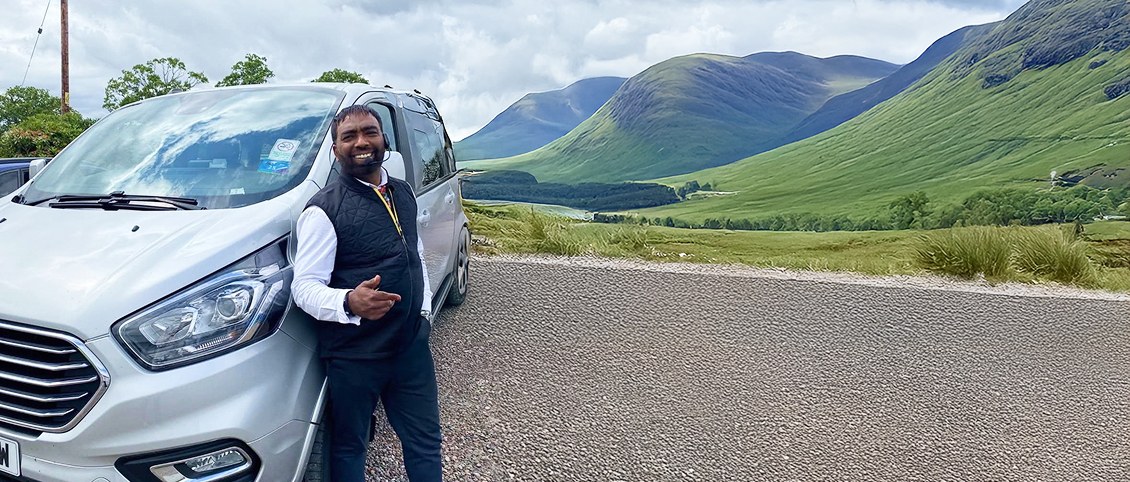
Aleman is a local guide who leads Friendly Highland Tours. He has lived in the Highlands for over thirty years. He knows the land through real journeys on quiet roads, lochs, and glens. Families and small groups travel with him for calm days and warm stories. Each guide he writes comes from experience on the road and careful consideration.